Is AI reaching a dead end? While the world marvels at the capabilities of Large Language Models (LLMs) like GPT-4, Turing Award winner Yann LeCun believes a fundamental shift is needed. He argues that LLMs, while impressive at text generation, lack a crucial ingredient for true artificial intelligence: an understanding of the physical world.
This belief is the driving force behind his new startup, AMI Labs, which has just secured a staggering $1.03 billion seed round – the largest in European history. This massive investment underscores the significant interest and potential in LeCun’s vision for “Physical” AI, built upon the foundation of “World Models.”
But what exactly are World Models, and how do they differ from the dominant LLMs? To understand this shift, we need to delve into the core limitations of current AI and the ambitious goals of AMI Labs.
The Limitations of LLMs: A Text-Based World
LLMs are trained on massive datasets of text, allowing them to learn patterns and correlations within language. They excel at tasks like translation, summarization, and even writing creative content. Their power lies in predicting the next word in a sequence, a process known as auto-regressive modeling.
However, this text-centric approach comes with significant drawbacks:
-
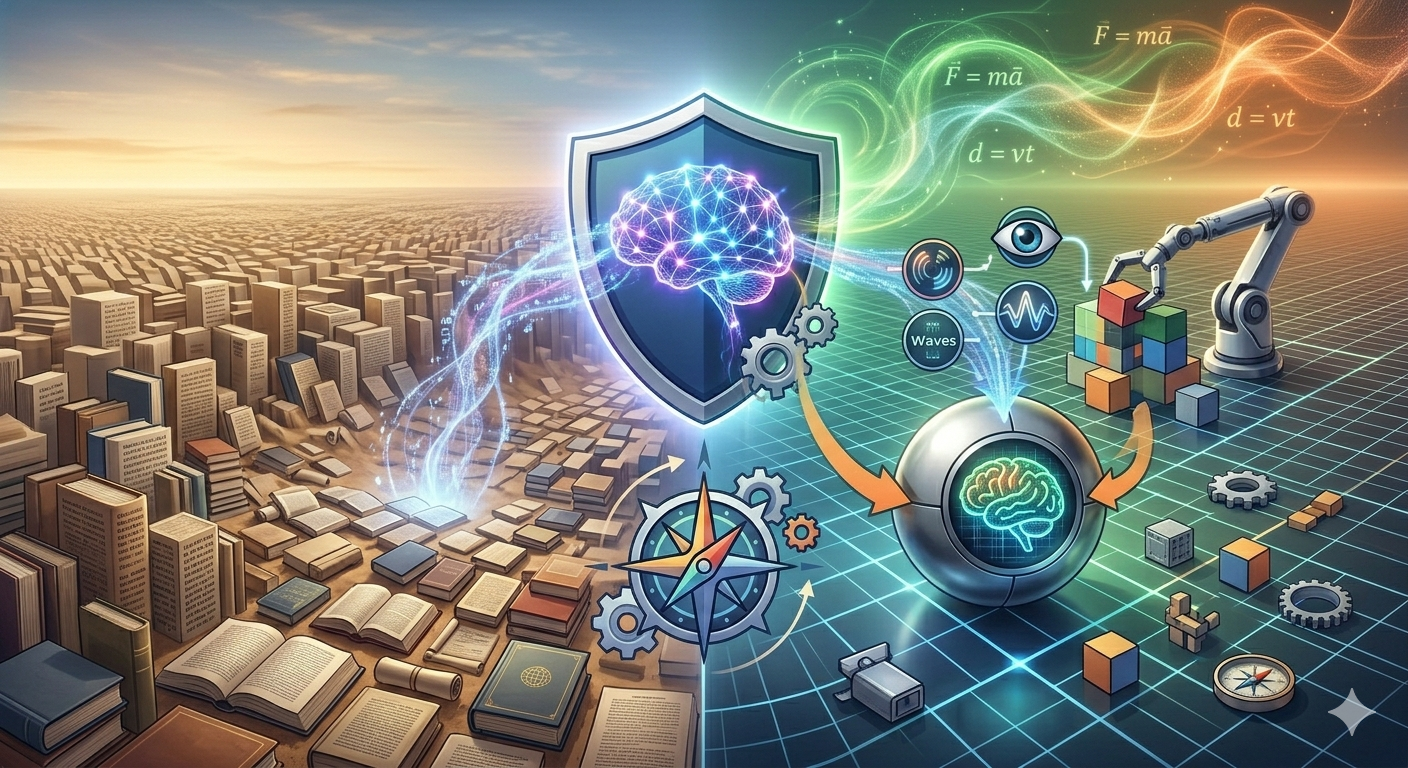
Lack of Grounding: LLMs operate within a world of abstract symbols (words), completely detached from physical reality. They don’t understand the physical properties of objects, the consequences of actions, or the concept of causality in the real world.
-
Limited Reasoning and Planning: While LLMs can mimic logical reasoning to some extent, they struggle with complex tasks that require reasoning about multiple steps and their physical implications. This makes them ill-suited for real-world applications like robotics.
-
Inability to Learn from Direct Interaction: LLMs learn passively from data, not actively through interaction. They cannot explore the world, perform experiments, and refine their understanding based on sensory feedback.
LeCun aptly summarizes this limitation by stating that LLMs are essentially “advanced autocomplete engines.” They are incredibly sophisticated, but they lack the fundamental understanding that allows even small animals to navigate and interact with their environment effectively.
Enter World Models: AI with a Sense of Reality
World Models represent a fundamental shift in AI development. Instead of simply predicting the next word, they aim to build internal models of how the world works. This involves:
-
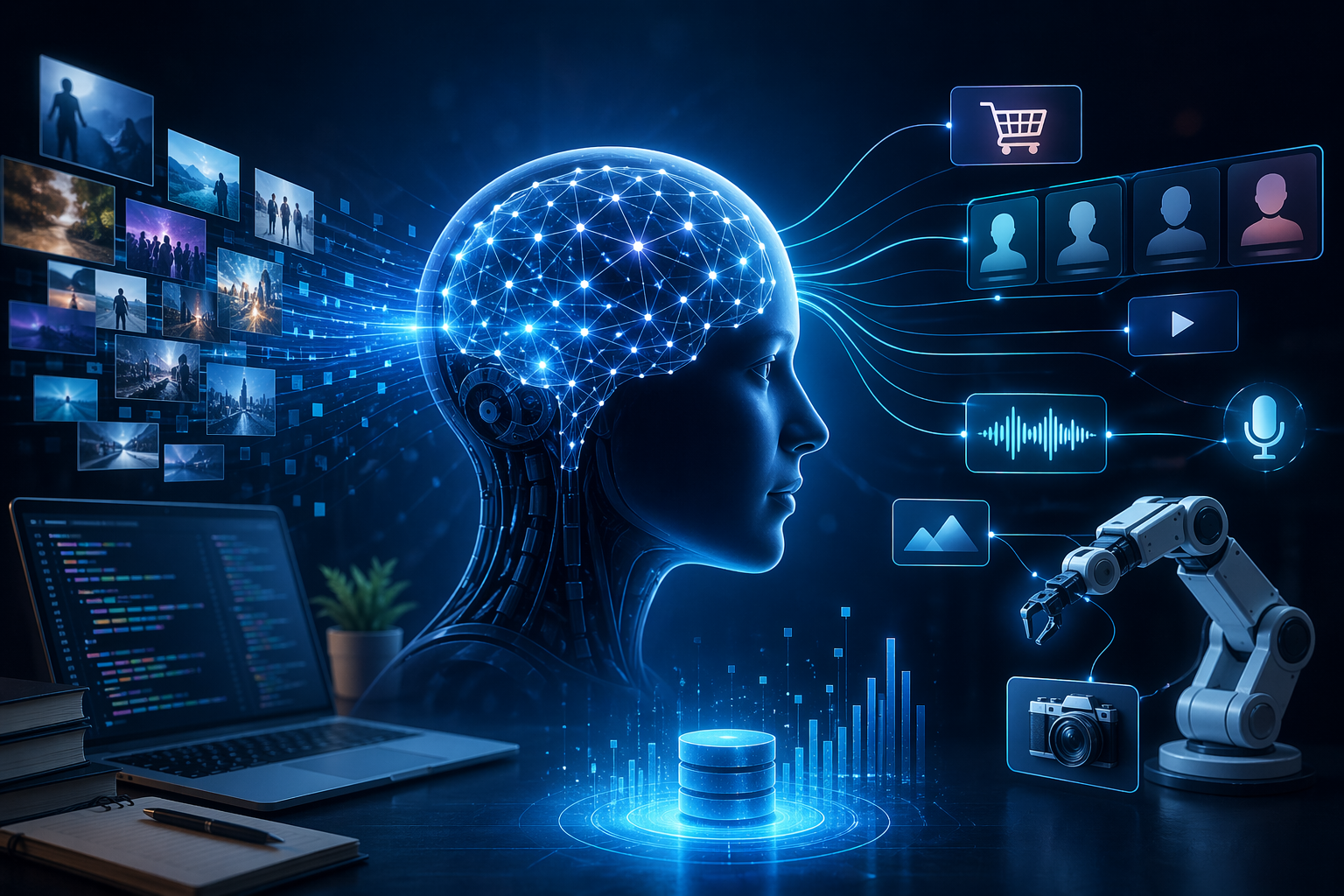
Learning from Sensor Data: World Models will be trained on diverse data sources beyond text, including images, videos, audio, and sensor data from robots. This will give them a rich, multimodal understanding of the physical environment.
-
Predicting the Consequences of Actions: These models will be able to predict the future state of the world based on the current state and a potential action. For example, a robot with a World Model could predict that pushing a cup will likely cause it to fall.
-
Planning and Reasoning in the Physical World: With an internal model of reality, AI agents can plan and reason about their actions. They can simulate different scenarios and choose the action that leads to a desired outcome, all within their internal mental workspace.
This concept isn’t entirely new. Researchers have been exploring World Models for decades. However, the current convergence of massive datasets, powerful computing, and breakthroughs in deep learning makes it possible to build significantly more ambitious and realistic models.
AMI Labs: Building the Foundation for Physical AI
AMI Labs, under the leadership of Yann LeCun, is focused on bringing this vision of World Models to life. The massive funding will accelerate the development of:
-
New Architectures: Researchers at AMI Labs will develop novel neural network architectures capable of learning complex, hierarchically structured World Models. This involves creating internal representations that can capture the world at different scales, from the physics of objects to long-term goals.
-
Scalable Training Methods: Training sophisticated World Models requires processing vast amounts of multimodal data. AMI Labs will invest in developing efficient and scalable training methods that can leverage huge datasets.
-
Physical Embodiment: A key part of the vision is grounding these models in the physical world. This means integrating World Models with robotic systems, allowing AI agents to learn through direct interaction and sensory feedback.
The ultimate goal is to create AI that can understand, reason about, and interact with the physical world in a way that is comparable to human or animal intelligence. This has implications across numerous domains:
-
Robotics: Robots with World Models could navigate complex, dynamic environments, learn new tasks without extensive manual programming, and interact with humans more safely and naturally.
-
Scientific Discovery: AI can help scientists simulate and understand complex physical systems, accelerating discovery in fields like materials science, drug discovery, and climate modeling.
-
Autonomous Vehicles: More robust and reliable self-driving systems could be built with a deeper understanding of the physical world and the ability to anticipate and react to unpredictable events.
The Debate: Evolution or Revolution?
LeCun’s approach represents a bold departure from the dominant LLM paradigm. It ignites a crucial debate about the future of AI development.
One perspective is that the path of scaling up LLMs will eventually lead to broader intelligence. Proponents argue that as LLMs grow larger and are trained on increasingly diverse text datasets, they will naturally develop emergent properties that resemble common sense and reasoning. They view the shift to World Models as potentially unnecessary or perhaps even a regression to older, less successful approaches.
LeCun, however, sees the limitation as fundamental. He believes that language is too abstract and impoverished to provide a sufficient foundation for understanding the physical world. While acknowledging the value of LLMs for specific tasks, he argues that a separate system – a World Model – is required to ground language and other symbolic representations in reality. He views the current LLM trajectory as leading to “brittle” AI, capable of impressive feats but prone to dramatic failures when faced with the unpredictability of the real world.
The Future of AI: A Pluralistic Approach
It’s likely that the future of AI will not be dominated by a single paradigm. Instead, we are likely to see a convergence of different approaches, with LLMs and World Models each playing a vital role.
LLMs will likely remain dominant in areas that are purely text-based, such as language processing, creative writing, and knowledge retrieval. World Models, on the other hand, will be crucial for any application that involves interaction with the physical world, such as robotics, physical simulations, and certain types of reasoning tasks.
The key challenge will be to find ways to integrate these different approaches. Can we build systems where an LLM provides a high-level symbolic understanding and reasoning capability, while a World Model handles the low-level physical grounding and planning? This type of hybrid architecture could potentially combine the strengths of both approaches and lead to significantly more capable and robust AI systems.
AMI Labs, with its massive funding and LeCun’s visionary leadership, is now at the forefront of this crucial endeavour. Their success could reshape the landscape of artificial intelligence, leading to a new generation of “physical” AI that truly understands and can navigate the complexities of our world.
Conclusion
The creation of AMI Labs and its record-breaking funding signal a significant moment in the evolution of AI. Yann LeCun’s pursuit of “World Models” represents a fundamental critique of the current dominance of LLMs and offers a bold alternative vision for achieving true artificial intelligence. Whether this path will prove to be the breakthrough that LeCun envisions remains to be seen. However, it undoubtedly injects new energy and a critical perspective into the field, forcing a deeper examination of what it truly means for a machine to understand and interact with the world around it. The results of this ambitious undertaking will be eagerly watched by the entire AI community, as they could hold the key to unlocking the full potential of artificial intelligence.