March 2026 has been a defining month for Artificial Intelligence. What once felt like rapid evolution is now turning into structured transformation across industries. From powerful new AI models to regulatory shifts and enterprise adoption, this month proved that AI is no longer just innovation—it is infrastructure.
In this blog, we break down the most important AI announcements from March 2026 that are shaping the future of business, technology, and everyday life.
1. The Rise of Fully Autonomous AI Agents
One of the biggest developments this month has been the expansion of autonomous AI agents. Unlike traditional AI tools that require prompts and supervision, these agents are capable of executing complex, multi-step tasks independently.
Companies are now deploying AI agents that can:
- Manage customer support end-to-end
- Execute marketing campaigns
- Build and deploy software with minimal human input
This shift marks the transition from “AI assistants” to “AI operators.” Businesses are no longer just using AI to support teams—they are building entire workflows around it.
2. Enterprise AI Adoption Hits a New Peak
March 2026 saw a surge in enterprise AI adoption across sectors like finance, healthcare, logistics, and retail.
Large organizations are now integrating AI into core operations such as:
- Financial forecasting
- Supply chain optimization
- Risk management
- Personalized customer experiences
What’s different now is the scale. AI is no longer a pilot project—it’s being deployed company-wide. Many firms have introduced “AI-first” strategies, where every department is expected to leverage AI tools to improve efficiency and decision-making.
3. Breakthroughs in Multimodal AI
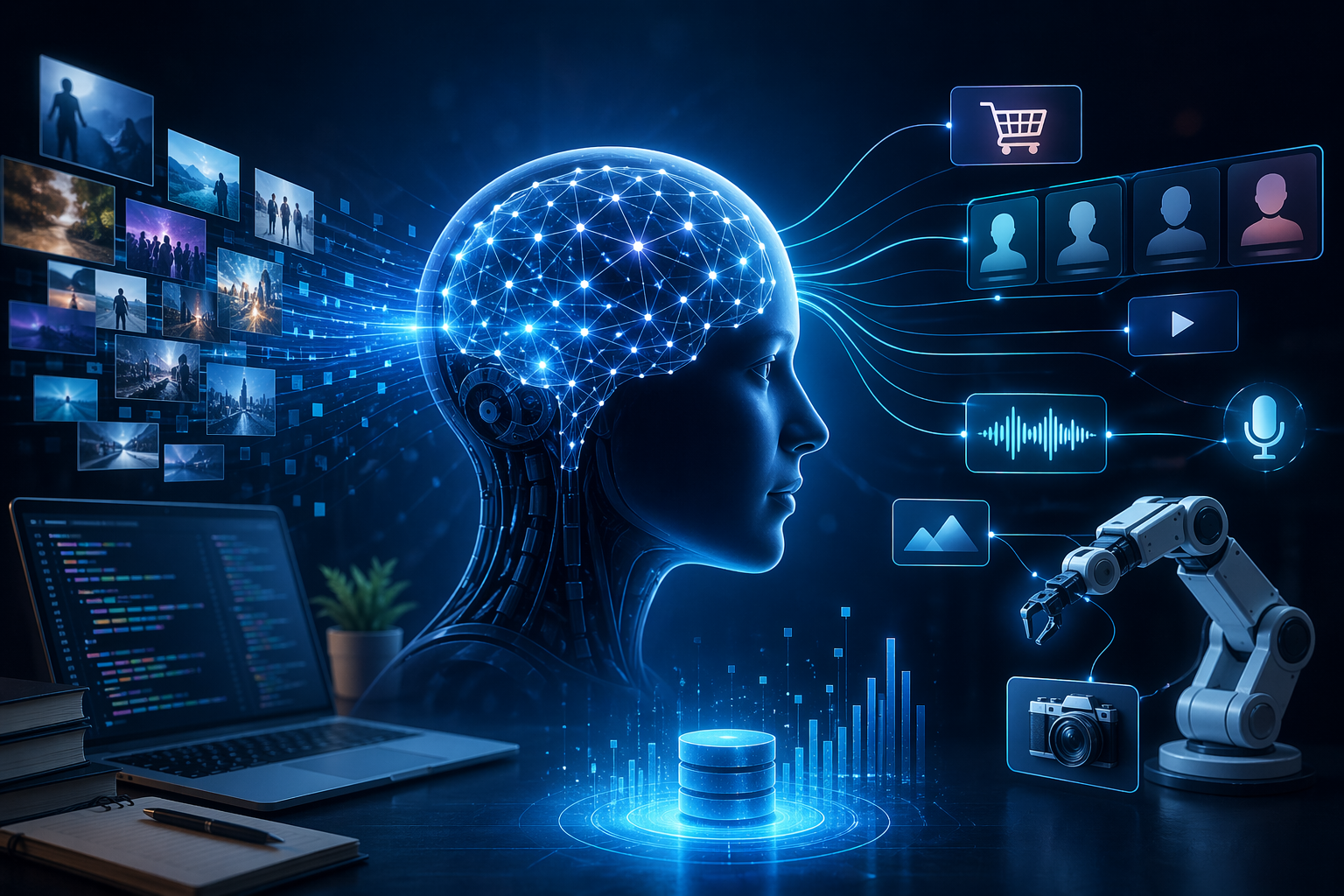
Another major highlight this month is the advancement of multimodal AI systems—models that can understand and generate text, images, audio, and video simultaneously.
These systems are now capable of:
- Creating full marketing campaigns from a single brief
- Generating videos from text prompts
- Understanding complex documents that include visuals and data
This is a game-changer for content creators, marketers, and businesses. It significantly reduces the need for multiple tools and teams, enabling faster and more cohesive output.
4. AI Regulation Becomes More Strict and Clear
March 2026 also brought stronger enforcement of AI regulations, particularly in Europe.
The EU AI Act is now actively shaping how companies develop and deploy AI systems. Organizations are required to:
- Ensure transparency in AI decision-making
- Conduct risk assessments
- Avoid bias and discrimination
- Maintain human oversight in critical applications
This shift from voluntary ethics to legal compliance is forcing businesses to rethink their AI strategies. Compliance is no longer optional—it is essential.
5. On-Device AI and Edge Computing Expansion
A significant trend this month is the rapid growth of on-device AI, also known as edge AI.
Instead of relying on cloud servers, AI models are now running directly on:
- Smartphones
- Wearables
- IoT devices
This brings several benefits:
- Faster processing (low latency)
- Better privacy (data stays on device)
- Reduced operational costs
Tech companies are heavily investing in optimized, smaller AI models that can deliver powerful performance without needing massive infrastructure.
6. AI in Healthcare: Predictive and Preventive Care
Healthcare saw some of the most impactful AI advancements this month.
New AI systems are now being used for:
- Early disease detection
- Personalized treatment planning
- Real-time patient monitoring
Predictive AI is helping doctors identify conditions like heart disease and diabetes before symptoms appear. This shift from reactive to preventive healthcare could significantly improve patient outcomes and reduce long-term costs.
Additionally, AI-powered documentation tools are reducing administrative burdens on doctors, allowing them to focus more on patient care.
7. AI-Powered Creativity Reaches New Heights
Creative industries are also being transformed by AI.
In March 2026, new tools emerged that can:
- Generate high-quality videos in minutes
- Create music with realistic vocals
- Design branding assets instantly
Content creation is becoming faster, cheaper, and more accessible. However, this also raises questions about originality, copyright, and the role of human creativity in an AI-driven world.
8. Workforce Transformation Accelerates
One of the most talked-about topics this month is the impact of AI on jobs.
While there is concern about job displacement, the reality is more nuanced. AI is not just replacing roles—it is reshaping them.
Key changes include:
- Developers becoming AI orchestrators
- Marketers focusing on strategy instead of execution
- Analysts working alongside AI for deeper insights
The demand for skills like AI management, prompt engineering, and system orchestration is growing rapidly. Professionals who adapt to these changes are finding new opportunities in the evolving job market.
9. AI Infrastructure and Energy Concerns
As AI adoption grows, so does the demand for computing power.
March 2026 highlighted increasing concerns around:
- Energy consumption of AI models
- Environmental impact of data centers
- Sustainability of large-scale AI systems
In response, companies are investing in:
- Energy-efficient hardware
- Green data centers
- More efficient AI architectures
Sustainability is becoming a key focus area in the AI ecosystem.
Final Thoughts
March 2026 has made one thing clear: AI is no longer just a technological trend—it is a foundational force shaping the future.
From autonomous agents and enterprise adoption to regulation and healthcare breakthroughs, this month’s announcements show that we are entering a new phase of AI maturity.
The key question now is not whether AI will impact your industry—but how quickly you can adapt to it.
Businesses, professionals, and creators who embrace these changes will be the ones leading the next wave of innovation.