Healthcare is undergoing a profound transformation with the rise of artificial intelligence (AI). Among the most groundbreaking applications is AI-powered diagnostics, which is revolutionizing the way diseases are detected and managed. Unlike traditional diagnostic methods that often rely on visible symptoms or manual analysis, AI leverages medical imaging, genomics, and advanced algorithms to predict illnesses before symptoms even appear.
The Power of AI in Early Disease Detection
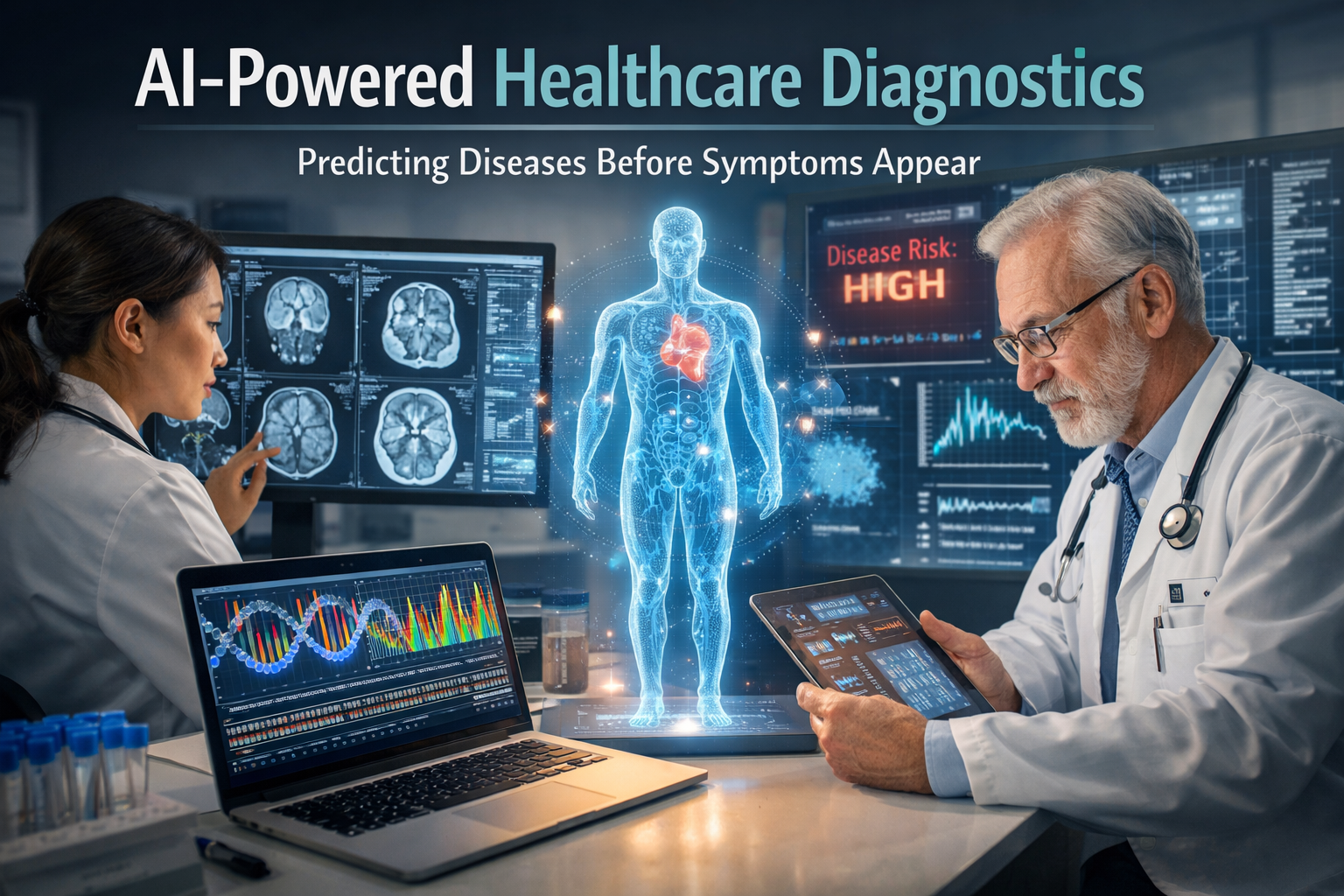
Early detection is often the key to successful treatment and better patient outcomes. AI can analyze vast datasets of medical images, lab reports, and genetic information to identify subtle patterns invisible to the human eye. For example, AI algorithms can detect early signs of cancer in imaging scans such as MRI, CT, or X-rays, often months before a radiologist would notice them.
In addition, AI-powered tools can predict genetic predispositions to diseases by analyzing a person’s genome. With this capability, doctors can create personalized healthcare plans, allowing preventive interventions that could significantly reduce the risk of severe illness.
Medical Imaging Meets AI
Medical imaging has long been a cornerstone of diagnostics. However, interpreting scans can be time-consuming and subject to human error. AI models, particularly deep learning algorithms, can process thousands of images in seconds, identifying anomalies with impressive accuracy. For instance:
- Detecting early-stage lung cancer in CT scans
- Spotting microscopic retinal damage indicating diabetic retinopathy
- Identifying cardiovascular risks through analysis of heart imaging
By automating the detection process, AI reduces diagnostic delays, ensures consistency, and empowers radiologists to focus on critical decision-making rather than routine analysis.
Genomics and Predictive Analytics
Beyond imaging, AI’s role in genomics is reshaping preventive medicine. Genomic sequencing generates massive datasets, which are impossible for humans to analyze manually. AI models can process this data to:
- Identify genetic markers associated with diseases like Alzheimer’s or certain cancers
- Predict susceptibility to chronic conditions such as diabetes or heart disease
- Recommend personalized lifestyle changes and treatments to mitigate risks
These insights transform healthcare from reactive to proactive, enabling interventions before a disease manifests.
Real-World Impact and Success Stories
Several AI-powered diagnostic tools have already shown remarkable results. For example:
- Google Health developed AI algorithms capable of detecting breast cancer in mammograms with higher accuracy than radiologists.
- AI systems in cardiology can predict heart failure months before clinical symptoms appear, giving patients a vital window for preventive care.
- In genomics, AI models help identify rare genetic disorders in newborns, guiding early interventions that save lives.
These examples demonstrate the tangible benefits of AI in improving patient outcomes, reducing healthcare costs, and increasing efficiency in hospitals and clinics.
Challenges and Ethical Considerations
Despite its potential, AI in healthcare diagnostics is not without challenges. Data privacy is a significant concern, as AI requires access to sensitive patient information. Additionally, AI models must be trained on diverse datasets to avoid biases that could affect accuracy for certain populations.
Ethical guidelines and regulations are being developed worldwide to ensure that AI tools are transparent, safe, and equitable. Collaboration between technologists, doctors, and policymakers is crucial to make AI a trusted partner in healthcare.
The Future of AI Diagnostics
The future promises even more advanced AI applications, such as:
- Real-time monitoring through wearable devices that predict health issues before they become critical
- AI-assisted drug development tailored to individual genetic profiles
- Integration with telemedicine platforms for remote, accurate diagnostics
As AI continues to evolve, healthcare is moving toward a predictive, personalized, and proactive model, where diseases are detected and prevented rather than merely treated.
Conclusion
AI-powered healthcare diagnostics are no longer science fiction. By combining medical imaging, genomics, and predictive algorithms, AI is enabling early disease detection and personalized care. The integration of AI into healthcare systems holds the promise of saving lives, reducing costs, and revolutionizing medicine as we know it.
Embracing these technologies responsibly will ensure that patients benefit from faster, more accurate, and preventative healthcare, making AI an indispensable partner in the medical field.