In a major announcement that signals a new era for enterprise intelligence, Tableau has unveiled its latest strategic move: the Tableau Model Context Protocol (MCP). As AI models like Anthropic’s Claude become increasingly capable of generating interactive visualizations, the conversation in the corporate world is shifting. It is no longer enough for an AI to be “smart”; it must be correct.
According to a recent briefing by Southard Jones, Chief Product Officer at Tableau, the goal of this new integration is to bridge the gap between the generative power of Large Language Models (LLMs) and the rigid, governed “truth” that enterprises require to make million-dollar decisions.
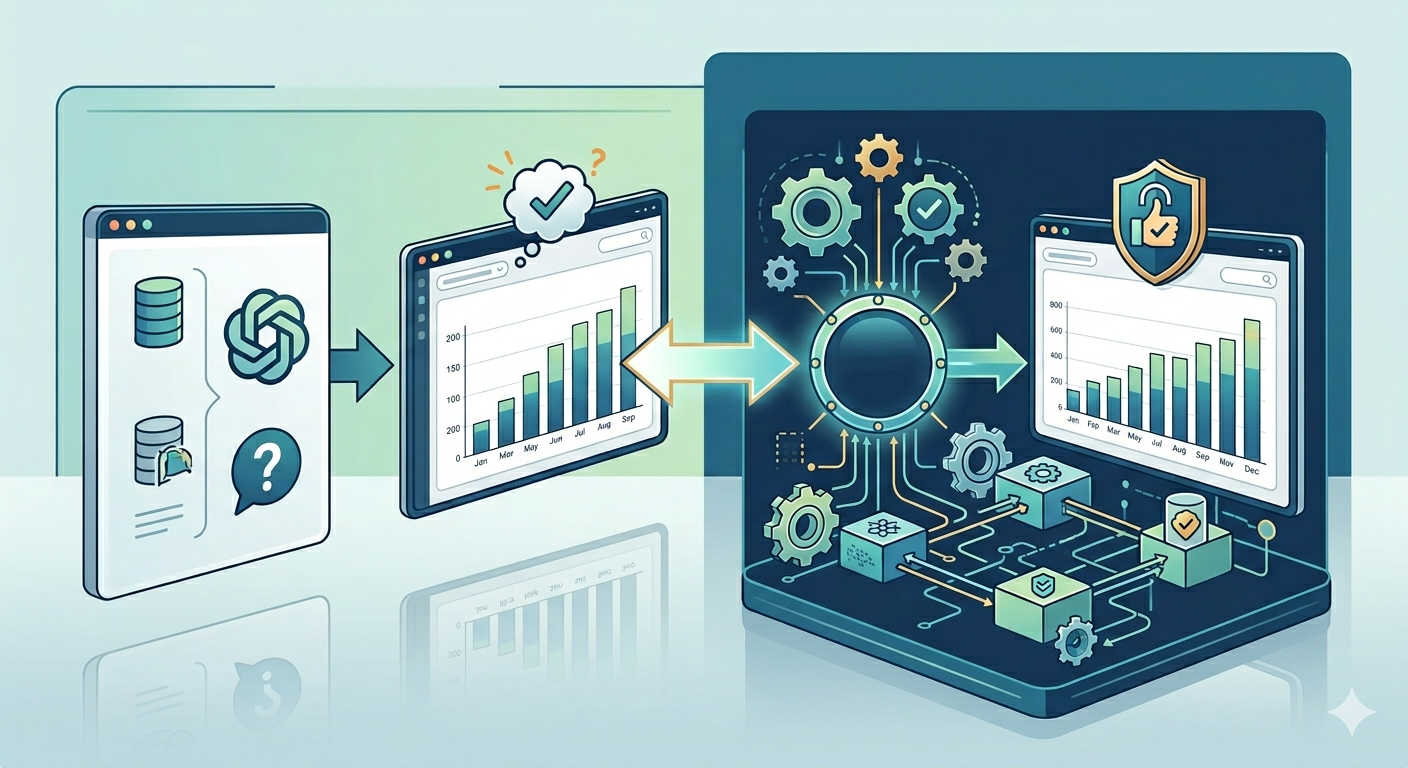
The Problem: Polished but Unreliable
LLMs are incredibly adept at analyzing raw data, writing SQL queries, and producing aesthetic charts. However, in an enterprise setting, they often lack the “institutional memory” required for accuracy.
Consider a common business question: “What are our top enterprise accounts at risk this quarter?” Without a semantic layer, an AI might look at raw data and guess what “enterprise” means or use a generic definition of “risk.” It produces a polished visualization, but the underlying logic may be entirely disconnected from how the company actually operates. For a Fortune 100 executive, a “pretty” chart that uses the wrong definition of revenue isn’t just unhelpful—it’s dangerous.
The Solution: Tableau MCP (Model Context Protocol)
Tableau is positioning itself as the “System of Understanding.” For over a decade, organizations have used Tableau to define, govern, and standardize their data. These definitions—how risk is calculated, which accounts are strategic, and how performance is tracked—are stored in millions of semantic models.
Tableau MCP allows AI models, specifically Anthropic’s Claude, to tap directly into this foundation.
-
Contextual Grounding: Instead of guessing, the AI “inherits” the business logic already established in Tableau.
-
Decision-Ready Insights: When Claude is grounded by the Tableau MCP, it doesn’t just see data; it sees the rules of the business.
-
Security & Governance: The AI operates within the existing security boundaries and permissions already set up in the Tableau platform.
From Experimentation to Agentic Analytics
The introduction of MCP marks the rise of Agentic Analytics. This isn’t just a chatbot responding to a prompt; it is an AI agent operating on trusted, governed knowledge.
In a recent demonstration, Claude was asked about the impact of electronics tariffs. Initially, the AI provided a generic macroeconomic summary. However, once the Tableau MCP connector was enabled, Claude gained access to the company’s specific metadata. It immediately identified which specific product lines were at high risk, transforming a general observation into a precise, actionable business insight.
Why This Changes Everything
For years, the hurdle for AI adoption in BI (Business Intelligence) has been a lack of trust. Executives often admit they are uncomfortable trusting AI “proofs-of-concept” because they cannot verify the reasoning.
By grounding AI in the semantic context of Tableau, companies can finally scale AI-driven decision-making. The real value of AI in 2026 isn’t just in generation—it’s in correctness, consistency, and trust. Tableau ensures that even as the tools we use to visualize data change, the “truth” remains constant.
Key Takeaways for Teams:
-
Trust over Speed: Fast answers are useless if they are wrong. MCP ensures AI answers match your official dashboards.
-
Unified Logic: Your AI agents will now use the same definitions as your human analysts.
-
Seamless Integration: This is a major step forward for those using Anthropic’s Claude as their primary AI assistant.
Source Credit: This update is based on the official news from the Tableau Blog: AI Can Draw the Chart. Tableau Defines the Truth by Southard Jones.